Translational genomics of pediatric solid tumors
- Head of Research Line "Translational Genomics of Pediatric Solid Tumors"
- Head of the NGS Bioinformatics Facility
- Head of the Analytical Phase for diagnostic testing of genetic cancer predisposition and pharmacogenetics
- Associate Professor of Medical Genetics, Department of Molecular Medicine and Medical Biotechnology, University of Naples Federico II
After completing a PhD in Human Genetics (2007), he conducted postdoctoral research at the Children’s Hospital of Philadelphia (2007–2008). Since 2009, he has led a research group at CEINGE dedicated to pediatric cancer genomics, focusing on germline predisposition, non-coding genome function, and methodologies for genome-wide association studies (GWAS) and polygenic risk scores (PRS). The group combines whole-genome and whole-exome sequencing, single-cell transcriptomics, and liquid biopsy to identify susceptibility variants, druggable somatic alterations, chemoresistance mechanisms, and circulating biomarkers.
He contributed to identifying key susceptibility loci for neuroblastoma, including BARD1, LMO1, LIN28B, and HSD17B12, and led the first NGS sequencing study of neuroblastoma in Italy. His group demonstrated that approximately 12% of children with neuroblastoma carry germline predisposition variants and described the role of non-coding somatic mutations in the disease.
He is a member of the SIOPEN Biology Working Group, where he leads a multicenter study on genetic predisposition to neuroblastoma, and participates in the Liquid Biopsy Working Group. He collaborates on national and international projects, including the European consortium MIREYA, and holds grants from AIRC. He coordinates the Multifactorial Diseases Working Group of the Italian Society of Human Genetics (SIGU).
The group investigates the genetic and molecular bases of pediatric cancers by integrating genomics, bioinformatics, and cell biology. The main research lines are:
- Genetic Predisposition to Pediatric Cancers: GWAS and germline sequencing studies (WES/WGS) in neuroblastoma and B-cell acute lymphoblastic leukemia to identify common and rare susceptibility variants.
- Non-Coding Genome: Functional characterization of regulatory variants associated with cancer risk and the mechanisms through which they contribute to disease onset and progression.
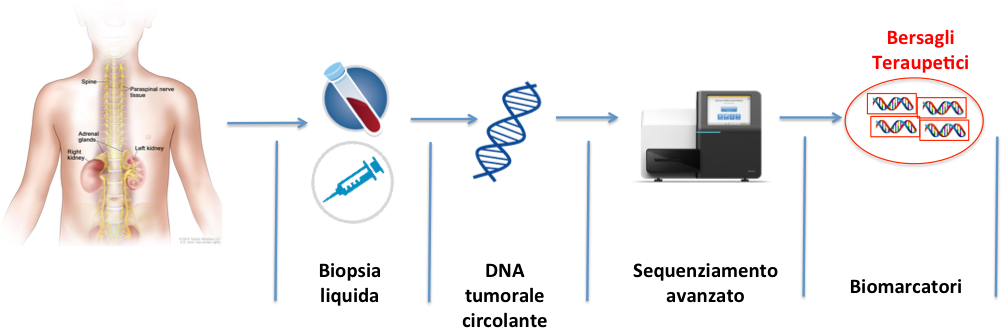
- Tumor Genomics and Liquid Biopsy: Identification of potentially druggable somatic alterations and development of circulating tumor DNA (cfDNA) approaches for disease diagnosis and monitoring.
- Biological Role of Mutations in Cancer: Functional assessment of the impact of genetic mutations on tumor biology using functional genomics and cellular models.
- Tumor Heterogeneity and Chemoresistance: Analysis of the tumor and its microenvironment before and after chemotherapy using single-cell/single-nucleus RNA sequencing to identify cell populations linked to resistance.